Warning sign
Water pooling next to the house
On clay, water is the thing that moves a foundation. Too little on one side and too much on another, and the two sides of the slab stop agreeing.
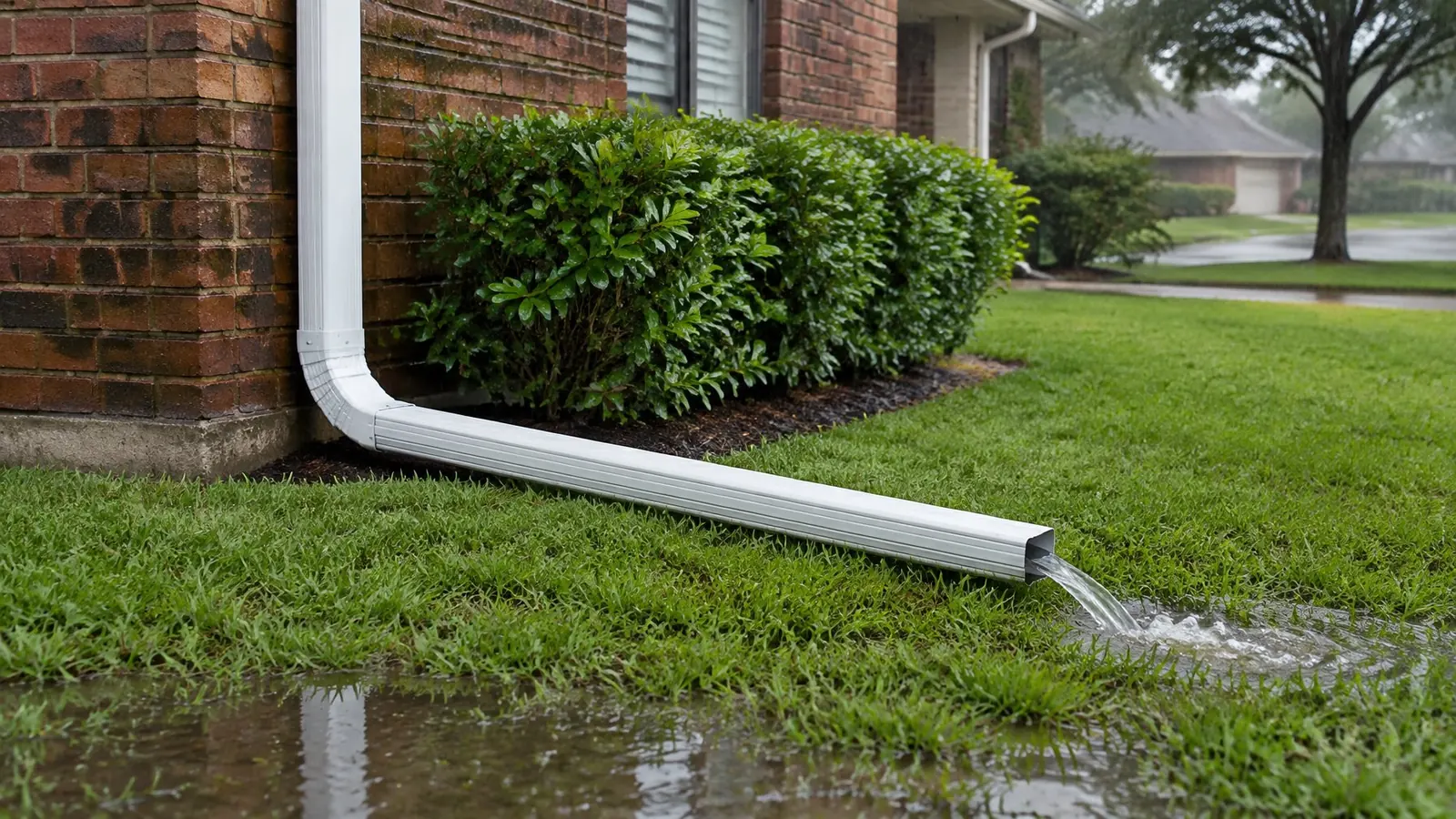
What to look for after a heavy rain
- Puddles touching the slab that are still there the next day.
- A downspout that empties right at a corner of the house.
- Flower beds with edging that traps water against the wall like a dam.
- Soil or mulch piled high enough to cover the gap at the bottom of the brick.
- A patch of lawn that stays soggy where the air conditioner drains.
- Soil washed out from under the edge of the slab, a patio or the driveway.
Flat lots drain slowly
Sugar Land is close to flat. A typical lot sheds rain through shallow dips along the side fences that lead to the street. Those dips are easy to fill in without meaning to: a new bed, a shed base, a run of fence boards set tight to the ground.
When water sits against one side of a slab, the clay there stays swollen while the far side dries and shrinks. The slab is stiff, so it tilts or cracks instead of bending. The damage shows up indoors months later, and the puddle is long forgotten.
What you can fix yourself
- Clear the gutters and add extensions so downspouts empty several feet out.
- Rake beds so the soil falls away from the wall, and keep a few inches of slab showing below the brick.
- Cut drain gaps in bed edging.
- Turn sprinkler heads so they do not soak the wall.
- Re-open the dip along the fence line if it has been filled.
There is more in the guide to looking after a foundation.
Which trade to call
A drainage or landscape contractor
For regrading, surface drains and buried drain pipe when the yard holds water and the house shows no cracks or sticking doors.
A licensed plumber
For a wet patch with no rain to explain it, a water bill that has jumped, or a sewer smell. Leaks under and beside the slab are plumbing work.
A foundation repair company
When the standing water comes with cracks, doors out of square or a tilted floor. That is what the number on this page is for.
A note on waterproofing
Waterproofing means sealing basement walls and floors against groundwater. It is a different trade from foundation repair, and since houses here are rarely built with basements it is seldom the answer. If someone proposes coating or sealing your slab to cure a drainage problem, ask how that moves the water away.
Questions about drainage
Can bad drainage damage a slab by itself?
It can contribute. Clay that is much wetter on one side of a house than the other swells unevenly, and a stiff slab responds by tilting. Whether that has happened at your house takes measurements to say.
Do gutters make a difference?
They can. A roof without gutters drops all its rain in a line a couple of feet from the slab. Gutters with long downspout extensions let you choose where that water goes.
When you are ready
Describe the problem and book an inspection
One call puts you in touch with an independent foundation repair company that works in Sugar Land. Have the address, the age of the house and a short list of what has changed.
Talk to a local foundation company
Say what you are seeing and where in the house. The company you reach is independent and gives you its own findings and its own price.
Call (832) 307-1056Read the referral disclosure and the privacy policy.